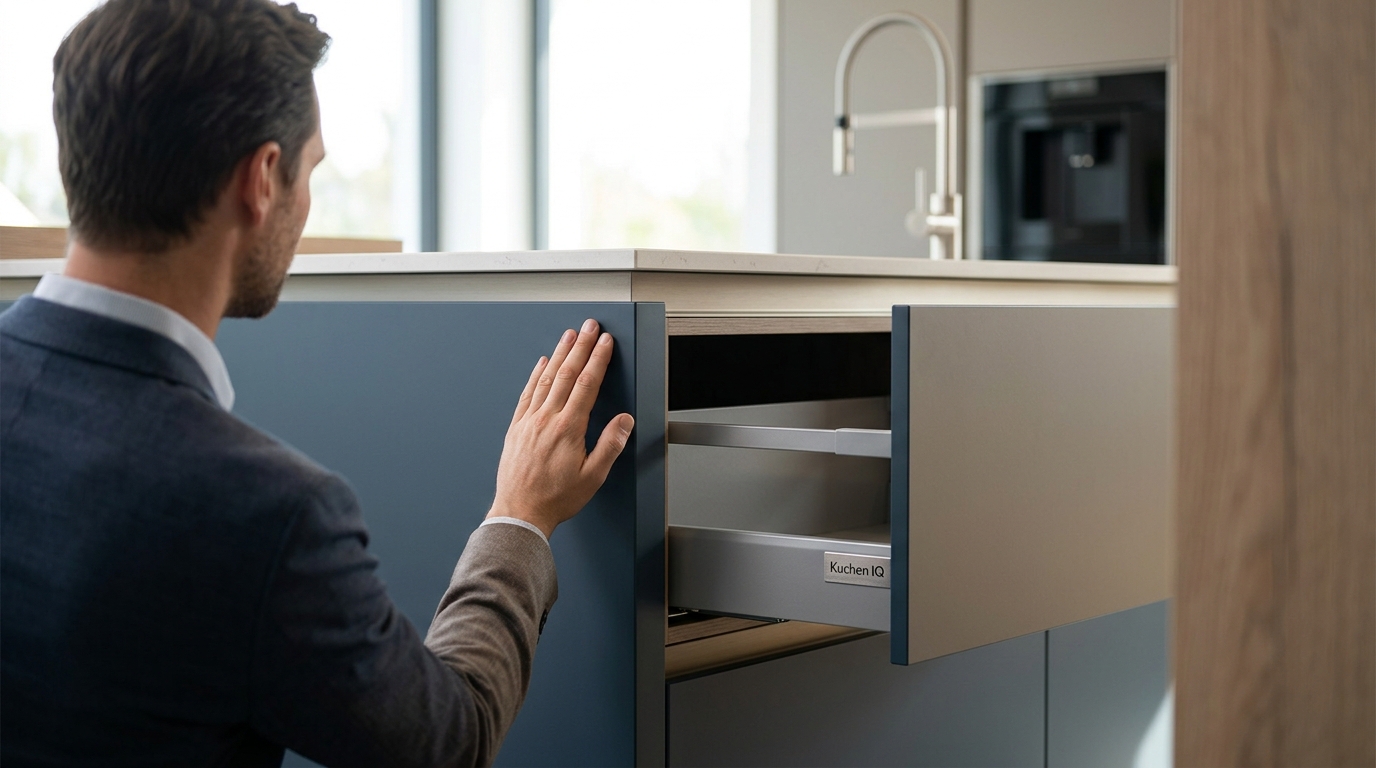
Benefits of Fully Assembled Kitchen Cabinets vs RTA
The Great Cabinet Debate: Precision Engineering vs. Flat-Pack Convenience
When embarking on a kitchen renovation, homeowners are faced with a pivotal decision that dictates the project's timeline, budget, and ultimate longevity: the choice between factory-built units and Ready-to-Assemble (RTA) alternatives. Understanding the benefits of fully assembled kitchen cabinets vs RTA is essential for anyone seeking a premium result that withstands the rigors of daily use. At Kuchen IQ, we believe that the kitchen is the heart of the home, and its structural integrity should never be compromised for a marginal reduction in upfront costs.
For decades, German engineering has set the global benchmark for cabinetry. By prioritizing fully assembled units, Kuchen IQ ensures that every cabinet arriving at your site is a testament to precision manufacturing. In this guide, we will dive deep into the technical, aesthetic, and financial factors that separate these two categories, helping you make an informed decision for your luxury renovation.
Defining the Landscape: RTA vs. Fully Assembled
To weigh the benefits of fully assembled kitchen cabinets vs RTA, we must first define what these terms mean in the context of modern interior design.
What are RTA Cabinets?
Ready-to-Assemble (RTA) cabinets are flat-packed units that require the homeowner or a contractor to put them together on-site. They typically use cam-lock systems, wood screws, and glue. While they are often cheaper to ship, the burden of structural stability rests entirely on the quality of the on-site assembly.
What are Fully Assembled Cabinets?
Fully assembled cabinets are constructed in a controlled factory environment. At Kuchen IQ, our German-engineered cabinetry utilizes industrial-grade equipment to ensure perfectly square boxes, high-pressure wood dowel joinery, and specialized adhesives that cure under specific environmental conditions. They arrive at your home ready for installation, eliminating the risk of human error during assembly.
The Technical Advantage: Structural Integrity and Joinery
The primary benefits of fully assembled kitchen cabinets vs RTA lie in how they are held together. The structural "skeleton" of a cabinet determines how much weight it can bear—especially important when installing heavy quartz or granite countertops.
RTA Joinery: Most RTA systems rely on cam-locks or metal brackets. Over time, these mechanical fasteners can loosen due to the natural expansion and contraction of wood materials. If a screw is overtightened or stripped during DIY assembly, the cabinet's structural integrity is permanently compromised.
Factory-Built Joinery: Premium fully assembled cabinets from Kuchen IQ utilize dowel-and-glue construction. These dowels are inserted by CNC machines with micron-level precision and bonded with high-strength adhesives. The result is a monolithic structure that is significantly stronger than any box held together by screws and cam-locks. This is a hallmark of the Design in Motion philosophy we champion.
The Comparison Table: At a Glance
| Feature | RTA (Flat-Pack) | Fully Assembled (Kuchen IQ) |
|---|---|---|
| Assembly Method | On-site (Manual) | Factory (Precision Machines) |
| Joinery | Cam-locks, Screws | Glued Dowels, High-Pressure Pressing |
| Labor Requirements | High (Hours of DIY or Pro Labor) | Low (Installation Only) |
| Warranty & Longevity | Limited (Assembly errors often void it) | Premium Lifetime/Long-term Coverage |
| Customization | Low (Fixed sizes) | High (Built to specific design specs) |
The Economic Reality: Total Cost of Ownership (TCO)
While the initial price tag of RTA cabinets might seem attractive, the benefits of fully assembled kitchen cabinets vs RTA become clear when you look at the total cost of ownership. Industry data suggests that assembling a standard kitchen’s worth of RTA cabinets can take an amateur 20–40 hours, and even a professional will charge a significant hourly rate for this tedious task.
- Labor Costs: If you are hiring a contractor, the money saved on the RTA product often gets funneled directly into the labor hours required to put them together.
- Tool Requirements: Proper assembly requires clamps, professional-grade levels, and specific drills.
- Error Risk: One misaligned hole or a dropped panel during assembly can result in costly replacements that delay the project by weeks.
By choosing Kuchen IQ, you are investing in a product that arrives optimized for quick installation. Learn more about our streamlined how it works process to see how we save you time and stress.
Aesthetic Superiority and Finish Quality
In a luxury kitchen, the details matter. One of the subtle but powerful benefits of fully assembled kitchen cabinets vs RTA is the finish. RTA cabinets often have visible "witness lines" or small gaps where panels meet, because manual assembly can never achieve the same compression force as a factory hydraulic press.
Furthermore, RTA cabinets often feature pre-drilled holes for various shelf configurations, many of which remain visible and require plastic "plugs" to hide. Kuchen IQ’s German cabinetry is manufactured to order, meaning every hole is drilled for a specific purpose, resulting in a cleaner, more sophisticated interior. Browse our inspiration gallery to see the seamless results of factory-assembled precision.
The IQ-4 Framework: Assessing Your Cabinet Needs
To help you determine which path is right for your home, we utilize the IQ-4 Framework—four pillars of assessment that highlight the benefits of fully assembled kitchen cabinets vs RTA.
1. The Precision Pillar
Is the cabinet box perfectly square? Even a 1/16th-inch deviation in a box can cause drawers to bind or doors to hang crookedly. Factory assembly ensures absolute squareness, which is nearly impossible to replicate consistently on a job site floor.
2. The Lifecycle Pillar
How long do you intend to live in your home? If this is your "forever home," the structural superiority of glued dowel construction is non-negotiable. RTA cabinets are often considered a 7-to-10-year solution, whereas German-engineered assembled units are designed to last 20+ years.
3. The Material Quality Pillar
Most RTA cabinets are made from lower-density particle board or thinner plywood to keep shipping weights down. Fully assembled units from Kuchen IQ use high-density, moisture-resistant materials that are built to handle the weight of premium hardware and heavy stone surfaces.
4. The Installation Timeline Pillar
A kitchen renovation is disruptive. RTA cabinets add days, if not weeks, to the timeline. Assembled cabinets can be installed the day they arrive, allowing you to get back to your routine faster.
Sustainability and Environmental Impact
A often-overlooked aspect of the benefits of fully assembled kitchen cabinets vs RTA is the environmental footprint. While RTA cabinets take up less space in shipping containers (reducing transit emissions), they are frequently associated with "disposable furniture" culture. Because they are harder to repair and more prone to structural failure, they end up in landfills sooner.
At Kuchen IQ, our German manufacturing partners adhere to some of the strictest environmental standards in the world (such as PEFC and FSC certifications). By building a kitchen that lasts twice as long as an RTA equivalent, you are effectively halving the environmental impact of your renovation over the long term.
FAQs on Fully Assembled vs. RTA Cabinets
Are fully assembled cabinets more expensive to ship?
Yes, because they take up more volume, shipping costs are generally higher than flat-packed units. However, this cost is usually offset by the significant savings in on-site labor and the increased home value associated with premium cabinetry.
Can I install fully assembled cabinets myself?
Absolutely. In fact, many DIYers find fully assembled cabinets easier to install because the difficult part—ensuring the boxes are square and the drawers are aligned—has already been done at the factory. You simply need to level and secure them to the wall.
Why is German cabinetry considered superior for assembly?
German manufacturing utilizes Industry 4.0 technology, where machines communicate to ensure perfect tolerances. This level of automation eliminates the human error that often plagues both RTA assembly and traditional custom shop construction.
Can RTA cabinets handle heavy countertops?
While some high-end RTA cabinets can, they are generally more prone to "racking" (side-to-side movement) under heavy loads. Fully assembled units with glued dowels offer significantly more lateral stability, making them safer for heavy quartz or granite slabs.
Conclusion: Making the Intelligent Choice
When you weigh the benefits of fully assembled kitchen cabinets vs RTA, the choice for a premium home becomes clear. While RTA may offer a lower entry price, the long-term value, structural integrity, and aesthetic finish of a factory-assembled unit are unparalleled. A kitchen is a significant investment; choosing cabinetry that is engineered to last ensures that your investment continues to pay dividends in both functionality and home equity.
At Kuchen IQ, we are dedicated to bringing the world-renowned quality of German cabinetry to your doorstep. From our precision joinery to our innovative design features, we ensure that your kitchen is not just a room, but a masterpiece of engineering.
Ready to transform your space with the precision of German cabinetry? Contact the Kuchen IQ team today for a consultation or to learn more about our premium collections.