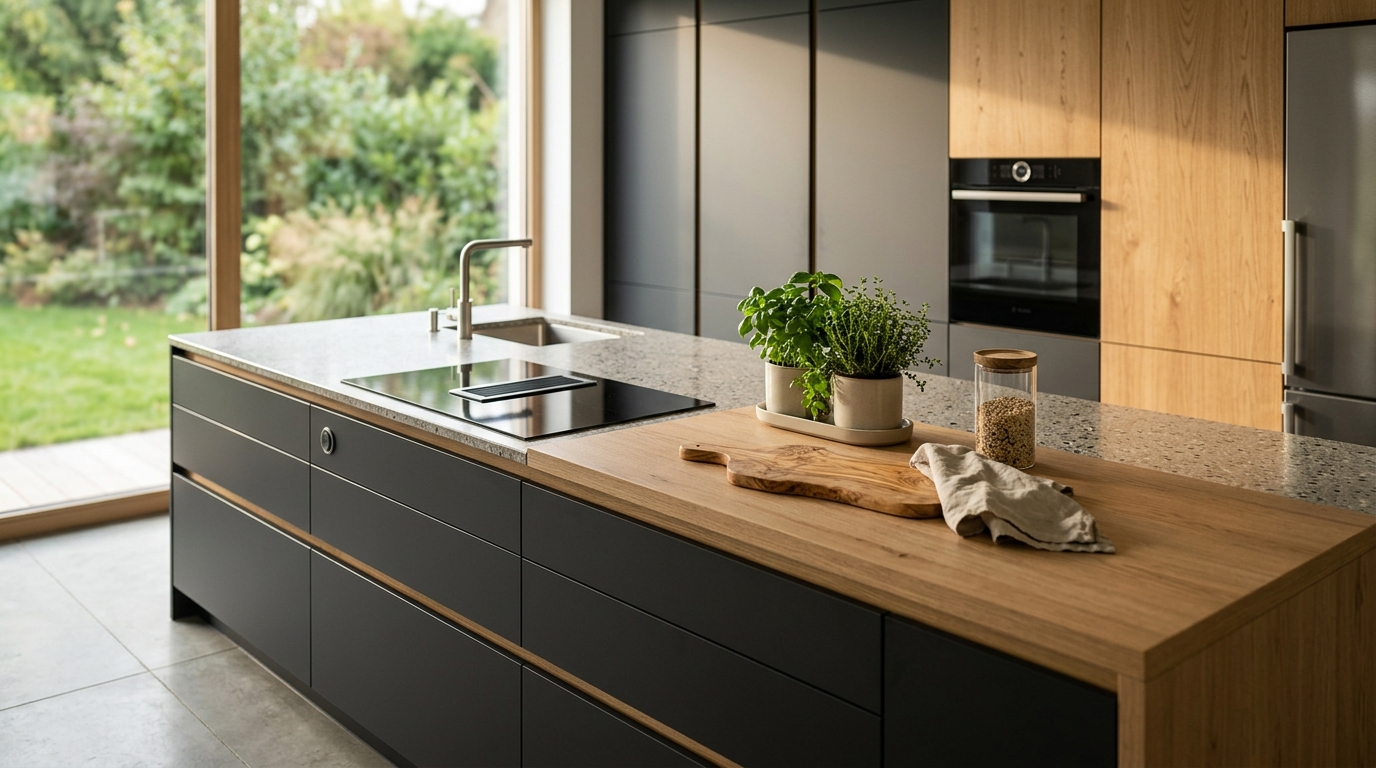
Guide to Eco-Friendly Modern European Kitchen Design
The Intersection of Luxury and Sustainability in Modern Kitchens
In the evolving landscape of home architecture, the kitchen has transitioned from a purely utilitarian space into the sustainable heart of the home. Today, homeowners are increasingly seeking eco-friendly modern European kitchen design as a way to harmonize high-end aesthetics with environmental responsibility. At Kuchen IQ, we believe that premium German cabinetry is the pinnacle of this movement, offering a seamless blend of precision engineering, longevity, and ethical manufacturing.
Choosing an eco-friendly kitchen is no longer just about selecting a low-flow faucet or LED lighting. It is a holistic approach that considers the lifecycle of materials, the carbon footprint of production, and the indoor air quality of your living space. European manufacturers, particularly those in Germany, have led the world in strict environmental standards for decades, ensuring that "luxury" and "green" are synonymous terms. In this guide, we will explore the methodologies behind sustainable design and how you can transform your home into a beacon of modern efficiency.
Defining Eco-Friendly Modern European Kitchen Design
The term eco-friendly modern European kitchen design refers to a design philosophy that prioritizes minimalist aesthetics, functional ergonomics, and sustainable material sourcing. Unlike traditional North American styles that may rely on heavy, bulky hardwoods or intensive chemical treatments, European design focuses on efficiency—both in terms of space and resource usage.
According to recent industry data, sustainable renovations can increase property value by up to 7-10%, as modern buyers prioritize healthy indoor environments and energy-efficient systems. For Kuchen IQ, this isn't just a trend; it is a fundamental pillar of our brand identity. You can learn more about our commitment to these values by exploring our behind the brand story, which highlights the rigorous standards of German cabinetry production.
The Pillars of Sustainable German Cabinetry
To understand what makes a kitchen truly eco-friendly, we must look at the manufacturing process. German cabinetry is often governed by some of the world’s strictest environmental certifications, such as the PEFC (Programme for the Endorsement of Forest Certification) and the Blue Angel (Der Blaue Engel) eco-label.
1. Responsibly Sourced Materials
At the core of every eco-friendly modern European kitchen design is wood. However, not all wood is created equal. Sustainable kitchens utilize timber harvested from managed forests where for every tree cut, several more are planted. This ensures a carbon-neutral cycle. Additionally, modern European cabinets often incorporate recycled wood fibers and bio-based resins, reducing the need for virgin materials.
2. Low-VOC and Non-Toxic Finishes
Indoor air quality is a significant concern in modern home design. Traditional cabinets often off-gas Volatile Organic Compounds (VOCs) like formaldehyde for years after installation. Premium German cabinetry utilizes water-based lacquers and UV-cured finishes that emit zero or near-zero VOCs. This ensures that your kitchen remains a healthy environment for your family.
3. Durability as Sustainability
One of the most overlooked aspects of sustainability is longevity. A kitchen that needs to be replaced every 10 years is fundamentally unsustainable. European engineering is famous for its "Design in Motion" philosophy, where hardware and hinges are tested for over 200,000 cycles. By investing in quality, you reduce waste in the long term. Discover the fluidity of our systems on our design in motion page.
Comparison: Traditional vs. Eco-Friendly European Cabinetry
To help you understand the tangible differences, we have outlined how eco-friendly modern European kitchen design differs from conventional cabinetry approaches.
| Feature | Conventional Cabinetry | Eco-Friendly European Design |
|---|---|---|
| Material Sourcing | Often unknown or unmanaged sources | PEFC and FSC Certified sustainable forests |
| Emissions | High VOC glues and lacquers | Formaldehyde-free and low-emission finishes |
| Lifespan | 10-15 years | 25-40+ years |
| Manufacturing | Resource-intensive mass production | Precision German engineering with waste-reduction tech |
The Actionable Framework for Planning Your Eco-Friendly Kitchen
Planning a sustainable kitchen requires a strategic approach. Use this four-step framework to guide your decision-making process.
Step 1: Conduct a Needs Assessment
Before looking at aesthetics, evaluate how you use your space. Minimalism is the soul of European design. By optimizing your storage through clever internal organizers, you can often reduce the total number of cabinets needed, saving both money and materials. For visual ideas on space optimization, browse our inspiration gallery.
Step 2: Prioritize Energy Efficiency
A kitchen is only as eco-friendly as the appliances within it. Seek out Induction cooktops, which are up to 90% more energy-efficient than gas. When choosing cabinetry, ensure the layout allows for proper ventilation of integrated appliances to extend their lifespan and maintain peak efficiency.
Step 3: Select Recyclable and Natural Surfaces
Pair your German cabinetry with countertops made from recycled glass, paper composite, or responsibly quarried stone. Avoid materials that require heavy chemical sealing. The goal is to create a circular kitchen where components can eventually be recycled or biodegraded.
Step 4: Professional Design Integration
The complexity of European hardware and modular systems requires expert planning. Understanding the nuances of "how it works" is essential for a successful renovation. We recommend reviewing our how it works section to see how our design-to-installation pipeline ensures zero-waste precision.
The Role of Precision Manufacturing in Waste Reduction
Waste is the enemy of sustainability. In a typical kitchen renovation, up to 15% of materials can be lost to cutting errors or poor planning. German manufacturing utilizes advanced software and robotic precision to reduce this waste to nearly zero. Every board is cut with laser accuracy, ensuring that materials are utilized to their maximum potential. This level of precision also means that the fit and finish of your kitchen will be superior, preventing the warping and gaps that often lead to premature failure in lower-quality products.
Psychology of the Sustainable Kitchen: Less is More
Eco-friendly modern European kitchen design is rooted in the "Less is More" movement. By focusing on clean lines, handleless fronts, and integrated technology, the kitchen feels calmer and more organized. This psychological benefit is a key component of modern wellness-focused design. When a space is designed for longevity and ease of use, it fosters a sustainable lifestyle within the home—encouraging healthy cooking and efficient waste management (such as integrated recycling centers).
The Aesthetic Value of Sustainable Design
Sustainability doesn't mean sacrificing style. In fact, European design often sets the global trends. Matte finishes, natural wood grains, and architectural silhouettes are all staples of the eco-friendly kitchen. These designs are inherently timeless, meaning they won’t look dated in five years, further supporting the "buy once, buy better" philosophy that is central to protecting our planet.
Frequently Asked Questions
Is German cabinetry really more sustainable than local options?
While local sourcing is often good, German manufacturers are subject to some of the world's most stringent environmental regulations (like DIN standards). Their factories are frequently carbon-neutral and utilize wood from 100% sustainably managed forests, which may offer a lower total environmental impact than local workshops without these certifications.
What does "low VOC" mean for my kitchen?
VOCs are chemicals that evaporate at room temperature. In a kitchen, these are usually found in cabinet finishes and glues. Low-VOC or VOC-free cabinets ensure that you aren't breathing in harmful toxins, which is essential for families and those with respiratory sensitivities.
How do I maintain an eco-friendly kitchen?
Maintenance is key to sustainability. Because premium European cabinetry is built to last, it simply requires gentle cleaning with non-toxic, pH-neutral cleaners. High-quality finishes are resistant to moisture and heat, meaning you won't need to refinish or replace doors due to wear and tear.
Can I integrate smart technology into a sustainable kitchen?
Absolutely. In fact, smart technology often aids sustainability. From smart refrigerators that track food waste to lighting systems that automatically adjust based on natural light, technology and eco-friendly design go hand-in-hand in the modern European home.
Conclusion: Your Path to a Greener Home
Embracing eco-friendly modern European kitchen design is a commitment to quality, health, and the future of our environment. By selecting Kuchen IQ's premium German cabinetry, you are not just buying a kitchen; you are investing in a legacy of craftsmanship that respects the planet. From the initial design phase to the precision installation, every step of our process is designed to provide you with a luxury experience that you can feel good about.
Ready to start your journey toward a more sustainable and beautiful home? Contact us today to speak with our design experts and discover how we can bring the excellence of German engineering into your kitchen.