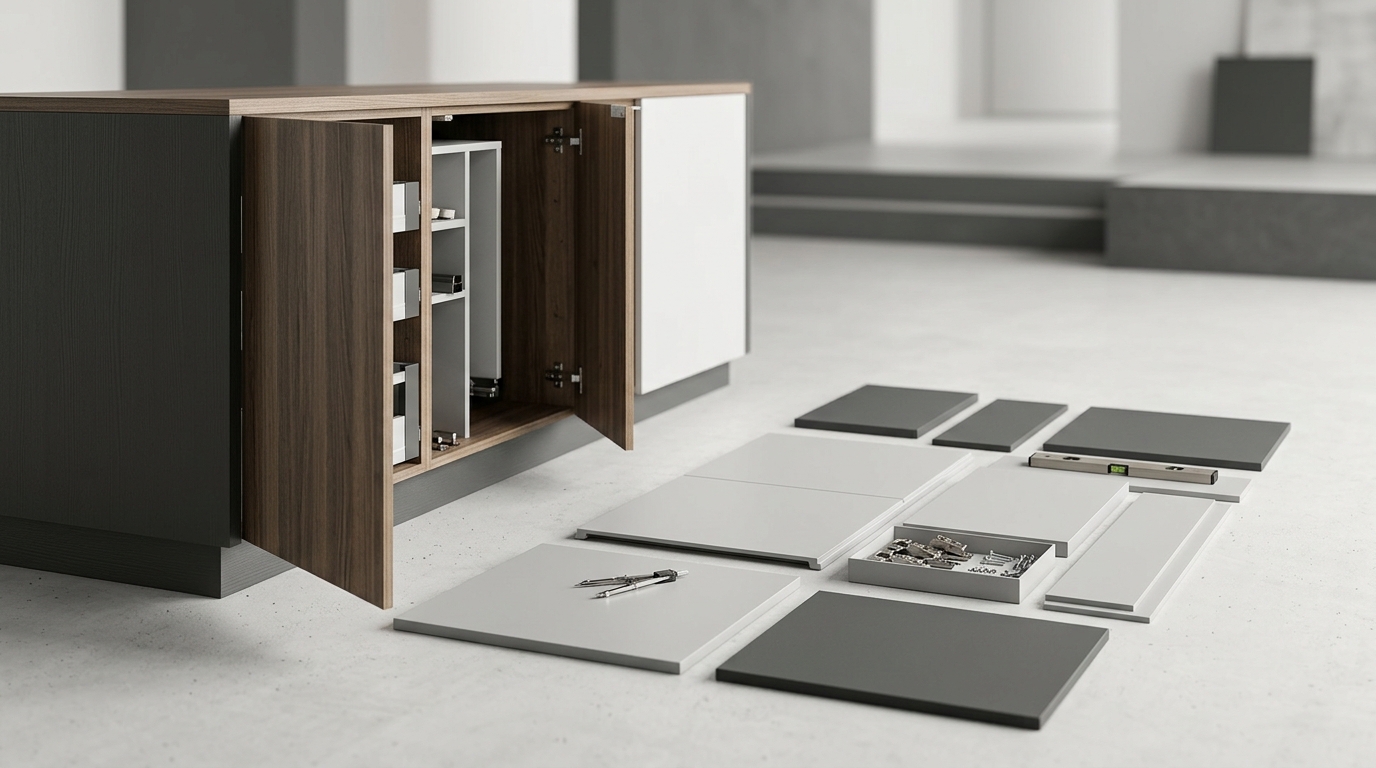
Fully Assembled vs Flat Pack Kitchen Cabinets: Expert Guide
The Great Cabinetry Debate: Choosing Between Fully Assembled and Flat Pack
When embarking on a kitchen renovation, homeowners are often faced with a critical decision that dictates not only their budget but the longevity and structural integrity of their investment: fully assembled vs flat pack kitchen cabinets. At Kuchen IQ, we believe that understanding the engineering behind these choices is the first step toward a kitchen that lasts a lifetime. While the allure of a lower price tag on flat pack units is significant, the precision and durability of factory-assembled German cabinetry offer a level of performance that is difficult to replicate on-site.
This guide provides an authoritative look into the world of kitchen cabinetry, comparing the structural nuances, installation timelines, and long-term value of these two manufacturing approaches. By the end, you will have a clear framework for deciding which option aligns with your vision for a premium home environment.
Defining the Contenders
What are Flat Pack Kitchen Cabinets?
Commonly referred to as Ready-to-Assemble (RTA), flat pack cabinets are shipped in pieces in a series of boxes. They rely on the homeowner or a local contractor to put them together using cam-locks, screws, and wood glue. While convenient for shipping, the structural integrity of a flat pack cabinet is only as good as the assembly process and the quality of the fasteners used.
What are Fully Assembled Kitchen Cabinets?
Fully assembled cabinets are manufactured, joined, and finished in a controlled factory environment. In the case of Kuchen IQ’s premium German cabinetry, these units are built using sophisticated machinery that ensures every joint is perfectly square and every component is bonded with industrial-grade precision. They arrive at your home ready to be secured to the walls, significantly reducing installation error. You can explore our dedication to this craft on our Behind the Brand page.
The Engineering Breakdown: Structural Integrity
The primary difference in the fully assembled vs flat pack kitchen cabinets debate lies in the joinery. German engineering focuses on the concept of "monocoque" strength—where the cabinet box acts as a single, rigid unit.
- Flat Pack Joinery: Usually relies on cam-lock systems or metal brackets. These can loosen over time due to the natural expansion and contraction of wood materials or the weight of heavy stone countertops.
- Fully Assembled Joinery: Employs wood-to-wood joinery, such as glue and dowel construction, performed under high pressure in a case clamp. This creates a bond that is often stronger than the wood itself, ensuring the cabinet will never rack or sag.
When you consider the weight of modern quartz or granite countertops, the structural advantage of a factory-built cabinet becomes an essential safety and quality consideration. Our Design in Motion philosophy showcases how these engineering choices translate into smooth, reliable functionality for the end-user.
Comparing the Two: Head-to-Head
| Feature | Flat Pack (RTA) | Fully Assembled (Kuchen IQ) |
|---|---|---|
| Installation Time | High (Hours of assembly per box) | Low (Direct to wall) |
| Structural Rigidity | Variable (Depends on assembly) | Maximum (Factory bonded) |
| Customization | Limited standard sizes | High (Precision engineering) |
| Cost (Initial) | Lower upfront | Higher upfront |
| Shipping Costs | Lower (Compact boxes) | Higher (Bulkier volume) |
The Economic Reality of Kitchen Cabinetry
While flat pack cabinets offer a lower initial purchase price, the true cost of fully assembled vs flat pack kitchen cabinets involves a calculation of labor and longevity. If you are hiring a professional to assemble your flat pack kitchen, the labor costs can quickly erode the savings made on the product itself. Industry data suggests that assembly labor can add 15-25% to the total project cost.
Furthermore, fully assembled German cabinets from Kuchen IQ are designed to last 20-30 years. Flat pack cabinets often require replacement or significant repair within 7-10 years, particularly in high-moisture areas or high-traffic households. When you amortize the cost over the lifespan of the kitchen, the premium choice often becomes the most economical one. To see how these cabinets look in real-world settings, browse our Inspiration gallery.
The Kuchen IQ Methodology: Why Assembly Matters
At Kuchen IQ, we don't just sell cabinets; we provide an engineered solution. Our process is designed to eliminate the variables that lead to kitchen failure. When comparing fully assembled vs flat pack kitchen cabinets, consider our specialized approach:
- Precision Milling: Every component is cut to 0.1mm accuracy using high-end German machinery.
- Zero-Joint Edging: We utilize advanced edge-banding technology that makes the transition from the cabinet face to the edge invisible and waterproof—something impossible to achieve with DIY flat pack assembly.
- Integrated Hardware: Our cabinets arrive with soft-close hinges and drawer runners pre-installed and calibrated, ensuring perfect alignment from day one.
You can learn more about our specific workflow and what to expect during your renovation on our How It Works page.
Pros and Cons: A Detailed Look
Flat Pack Cabinets
Pros:
- Lower shipping costs and easier to transport to remote locations.
- Immediate availability (often stocked in big-box stores).
- Lower initial entry price for tight budgets.
Cons:
- Time-consuming assembly that requires specific tools and space.
- Risk of human error during assembly leading to crooked cabinets or loose joints.
- Lower resale value for the home due to perceived quality.
Fully Assembled Cabinets
Pros:
- Professional-grade durability and structural integrity.
- Massively reduced installation time on-site.
- Higher-quality internal components and hardware integration.
- Increases home valuation.
Cons:
- Higher shipping costs due to volume.
- Requires more storage space on the job site before installation.
Making the Choice: A Decision Framework
To decide between fully assembled vs flat pack kitchen cabinets, ask yourself the following questions:
1. What is your timeline?
If you need a kitchen tomorrow and are prepared to spend your weekend with an Allen key, flat pack might work. However, if you want a seamless installation that minimizes the time your home is a construction zone, fully assembled is the clear winner.
2. Who is doing the work?
If you are a skilled woodworker, you might mitigate some of the risks of flat pack. If you are hiring a general contractor, they will almost always prefer fully assembled units because it allows them to guarantee their work and finish the job faster.
3. What is the intended lifespan of the kitchen?
Are you flipping a low-end rental property, or are you building your "forever home"? For high-end residential projects, the precision of German-made, factory-assembled cabinets is the industry standard.
Frequently Asked Questions
Are flat pack cabinets lower quality than assembled ones?
Generally, yes. While the material (MDF or Plywood) might be similar, the method of joining the pieces is significantly weaker in flat pack units. Factory-assembled cabinets use high-pressure bonding and doweling which creates a much more durable box.
Can I change the doors on fully assembled cabinets later?
Absolutely. Because fully assembled cabinets are built to standard (yet precise) dimensions, replacing doors or hardware in the future is actually easier because the box remains perfectly square and stable.
How do shipping costs compare for fully assembled vs flat pack?
Flat pack cabinets are much cheaper to ship because they take up less volume. However, the risk of damage during shipping is often higher with flat packs because the edges of the boards are exposed inside the boxes, whereas assembled cabinets are protected by their own structural rigidity and specialized crating.
Conclusion: The Kuchen IQ Advantage
In the debate of fully assembled vs flat pack kitchen cabinets, the choice ultimately comes down to the value you place on precision, durability, and peace of mind. While flat pack cabinets serve a purpose in entry-level projects, they cannot compete with the rigorous standards of German-engineered, factory-assembled cabinetry. At Kuchen IQ, we pride ourselves on delivering a product that represents the pinnacle of kitchen technology.
Ready to experience the difference that premium assembly makes? Our team of experts is ready to help you navigate the technical details of your next project. Contact us today for a consultation or to visit our showroom and see the Kuchen IQ quality for yourself.